The NBA Cup takes four scheduled regular-season games from each team and gives them an extra purpose. They also determine which clubs can win an in-season trophy. Six group winners and two wild cards reach a one-game elimination bracket. All Cup games through the semifinals count in the NBA regular season. The championship is held separately, so it has its own winner, box score and awards without changing either finalist's regular-season record.
There are three questions worth asking when you turn on a Cup game. Which opponents are in the group? How close is the team to the one wild-card place in its conference if it fails to finish first? Is the game already part of the single-elimination bracket? You may get a different answer for two teams on opposite sides of the same court. A leader protecting its group position can afford to focus on the win. The trailing team might need a good result and enough regulation points to stay close to other runners-up.
The examples below follow the 2026 rules. The NBA can change the dates and venues from one edition to the next, so check the current year when you look up a tournament fixture.
What the NBA Cup changes about an ordinary game
Say you open the NBA schedule and see Miami at Philadelphia underneath a group play label. The two teams play one game with their regular rotations and the usual NBA rules. A Miami win improves its regular-season record just as a November win on an ordinary night would. It also gives Miami a win in its four-game Cup group. Player points, rebounds and minutes from that night go into the regular-season totals. The extra information is the result for the tournament and, if regulation is enough to produce a winner, the scoring margin for a possible group tiebreak. The Miami–Philadelphia game page shows how a single fixture can carry both labels.
The Emirates NBA Cup is the league's annual in-season tournament, the competition fans still call the In-Season Tournament. The name often appears on the scoreboard alongside a group letter. Read that letter as part of the Cup draw. It does not identify the game as a meeting between teams in a particular NBA division. For example, an East team can play other East teams from several divisions in a group, while all those results remain part of its overall regular-season record. Look up the group in the league's tournament guide if its members aren't obvious from the matchup.
A team can play on a Friday Cup Night, return to ordinary NBA games and play another Cup Night in a different building the following week. The tournament resumes where the designated games left off. A club could lose twice in regular-season play between two Cup Nights and still turn up to its next Cup game with an unbeaten group record. The distinction helps when a team enters with two records displayed in two different apps. Check whether the column is for all games or for the tournament before trying to reconcile them.
The 2026 group phase illustrates where those nights sit on the calendar. It opened October 30, ran on Fridays through November 27 and also used November 24 and 25. When the Knicks visited Philadelphia on October 30 and the Lakers visited Golden State that same night, both games were in the group round. A nearby date on a team's schedule could have an ordinary regular-season game with a familiar opponent. Use the game label or the official Cup schedule to tell whether that result belongs in the tournament.
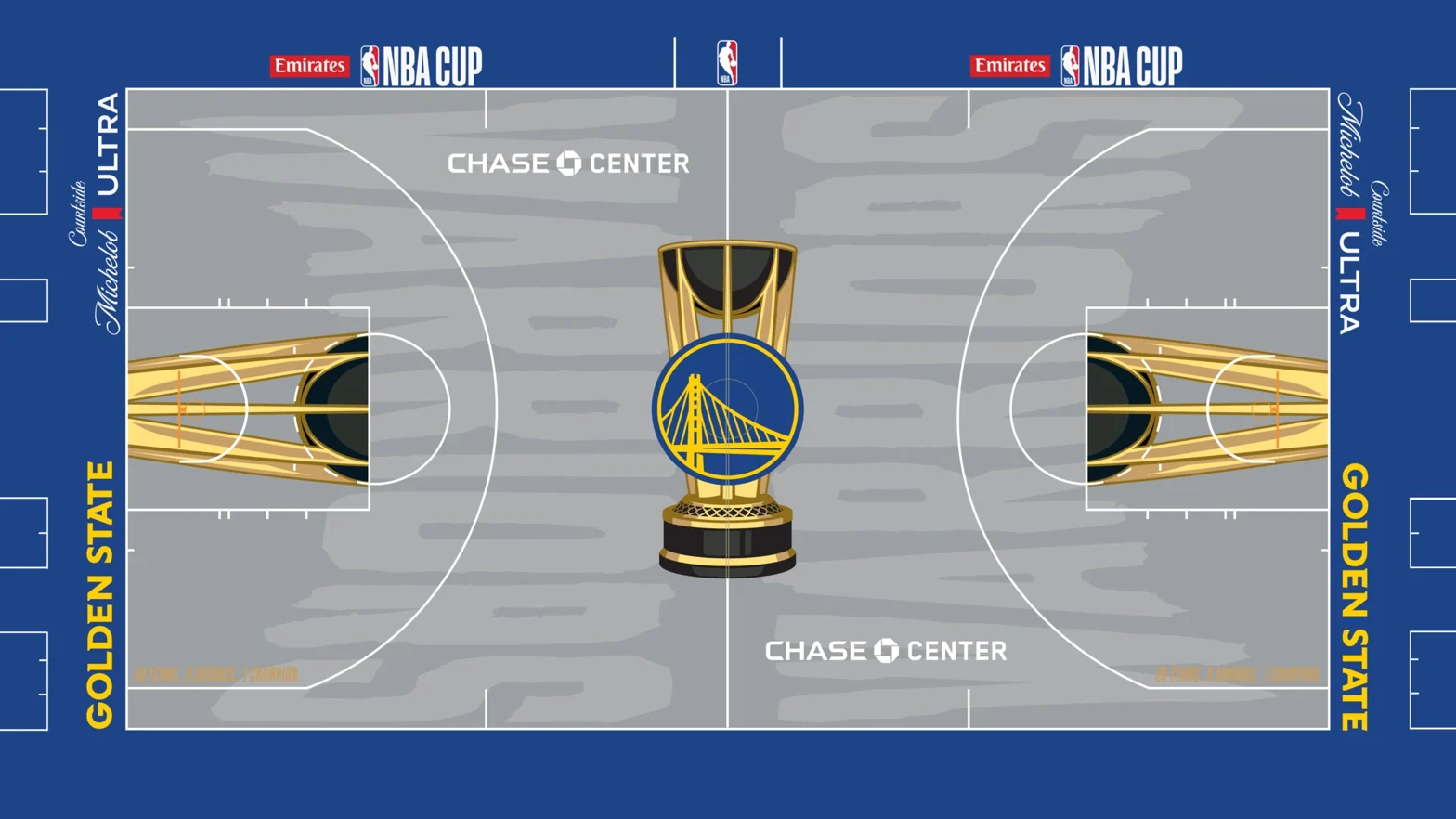
The NBA's court gallery gives fans a preview of the floor they will see at each arena. Choose a team to compare its usual colors with the design used for the tournament.
The painted courts are another clue. The NBA gives each host a tournament floor, with team imagery and the Cup trophy worked into the design. In 2026 the custom courts carry through the quarterfinals and semifinals. The floor is a useful cue when you switch broadcasts halfway through the night. The game listing is the place to confirm which group is playing and whether it is already a win-or-go-home game.
How 30 teams become eight quarterfinalists
A Cup table is easiest to read as six small races. There are three groups in the Eastern Conference and three in the Western Conference, each with five clubs. A team lines up against the other four clubs in its own group, once each, with two games at home and two on the road. Those four results are the evidence the league starts with when working out who has a place in the bracket. Games played in the weeks between Cup Nights can be important to an NBA team’s season, while the tournament table holds still until its next designated game.
How the league draws the groups
The league begins with last season's records within each conference. The top three teams form one draw pot, the next three form a second, and the process continues until all 15 clubs in that conference are in five pots. Each of the conference's groups receives one club from each pot. A club that finished at the top of its conference therefore goes into a different group than the other two from that top pot. The draw still allows those teams to meet if they get to the knockout round. For the 2026 Cup, the records used for the draw came from the 2025–26 regular season. The NBA format guide lays out the draw mechanics.
East Group B in 2026 included Cleveland, Indiana, Miami, New York and Philadelphia. Look up Miami on the official group list and the possible Cup opponents are already apparent. A Heat fan can write down those four games before the first night of the tournament and return to that list to see what remains. If a team meets the same opponent on a separate regular-season date, only the designated Cup matchup appears in these four games. East Group B and West Group B are separate races even though the league uses the same letter for both.
How the group winners and wild cards qualify
First place in each group earns one of six automatic quarterfinal spots. After those places are assigned, the league compares the three second-place teams in each conference. The best of those three gets the conference's wild card. That makes four qualifiers from the East and four from the West. The Cup standings display teams side by side within each group so you can identify eligible runners-up before comparing them across groups.
Suppose two teams in one group finish 2–2 and sit below the leader. The team that won their group meeting takes second in this simplified two-team tie, even if the other club scored enough overall to finish with a better margin. The third-place team drops out of the wild-card calculation. If the new runner-up matches a runner-up from another group at 2–2, the league can compare their group margins. Their ordinary regular-season meeting, if one already happened, does not enter that wild-card tiebreak. Settle the group before you compare across groups, and the table becomes much easier to follow.
Why regulation scoring matters in a tiebreaker
The first question is how many Cup games each team won. Once the league has a tie inside a group, it checks the tied teams’ Cup meetings. With two teams, that normally means finding the result of their one group game. With three teams, you can get a circle. Imagine the Bears beat the Wolves, the Wolves beat the Eagles and the Eagles beat the Bears. If each is one win and one loss in the games among them, the three-way tie can survive that first check. The next comparison uses differential over the full group stage. Include the games against opponents outside the tie. The official Cup rules set out the sequence.
Point differential is points scored minus points allowed. A regulation win by nine adds nine and a regulation loss by four takes away four. That calculation rewards teams that build a cushion across several Cup games. A team can lose a close one and still finish with a large positive margin, but a large margin only helps once the relevant teams’ records are tied and an applicable head-to-head check leaves a tie. A group opponent with one more win has already done enough to stay ahead.
Take a team that scores 116 and allows 108 in regulation in its first game. It starts at plus-eight. In the next game, it is tied at 104 through four quarters and wins 117–110 in overtime. It is now 2–0 with a differential of plus-eight. Its second game added a win, but added zero to the margin because the eligible points are tied at the end of regulation. Its total points for Cup tiebreak purposes rise by 104. The team still scored 117 in the NBA box score. The quarter scores and overtime splits show where to look when you need both numbers.
The rule has a real example in 2026. Chicago beat Atlanta in overtime on November 13. The Bulls received their Cup win and the Hawks received the loss, but the scoring from the extra period gave Chicago no advantage in the differential column and made no change to the regulation-only points total. When you see overtime beside a final in the league's group schedule and results, keep the winner in the record and mark the margin zero.
If differential also ties, the league checks total eligible points scored. Imagine two 3–1 runners-up with a differential of plus-20. The club that scored 440 eligible points ranks ahead of a club that scored 420, although their net margins match. If they also match on total eligible points, the better prior regular-season record comes next. A random drawing is the league's last resort. The same tiebreaking sequence governs wild cards except for the head-to-head step. That difference is why it pays to establish whether you are breaking a tie inside a group or comparing clubs from different groups before you start the math.
How the bracket fits around the 82-game season
The Cup bracket begins with a one-game quarterfinal. The group winner with the best Cup seed in each conference hosts the wild card. The two other group winners in that conference play each other, with the better seed at home. The winners move on to a semifinal and the losers drop out of the tournament. In 2026 the higher seed in each conference also hosts its semifinal. A fan may know their team is in the quarterfinals before they know its opponent, tipoff or arena. Wait for the league’s schedule update before using the result to make a travel plan.
Think about the bracket in terms of the two slots the NBA leaves open on the regular-season schedule. If a team wins its quarterfinal, that game fills one slot and its semifinal fills the other. If it loses its quarterfinal, that quarterfinal still counts and the league assigns another regular-season game against a team that also lost in the round. The 22 clubs that miss the knockout round receive two replacement regular-season games. Their opponents and locations are filled in using the Cup group results and scheduling constraints. Most games are within the conference. The format and replacement scheduling rules explain how the league completes the schedule.
This is why two December listings can stay open on a team's calendar even after most of the season is published. Before the group phase ends, the league cannot know which two postseason-in-name-only dates will actually be tournament games for that club. In 2026 the league set December 4–5 for the quarterfinals and December 8 and/or 9 for the semifinals. When those matchups and replacement games are announced, check the updated NBA schedule and game listings by team or date. A December regular-season quarterfinal victory belongs in both the Cup record and the NBA season record, just like a designated group game.
What changes for the championship game
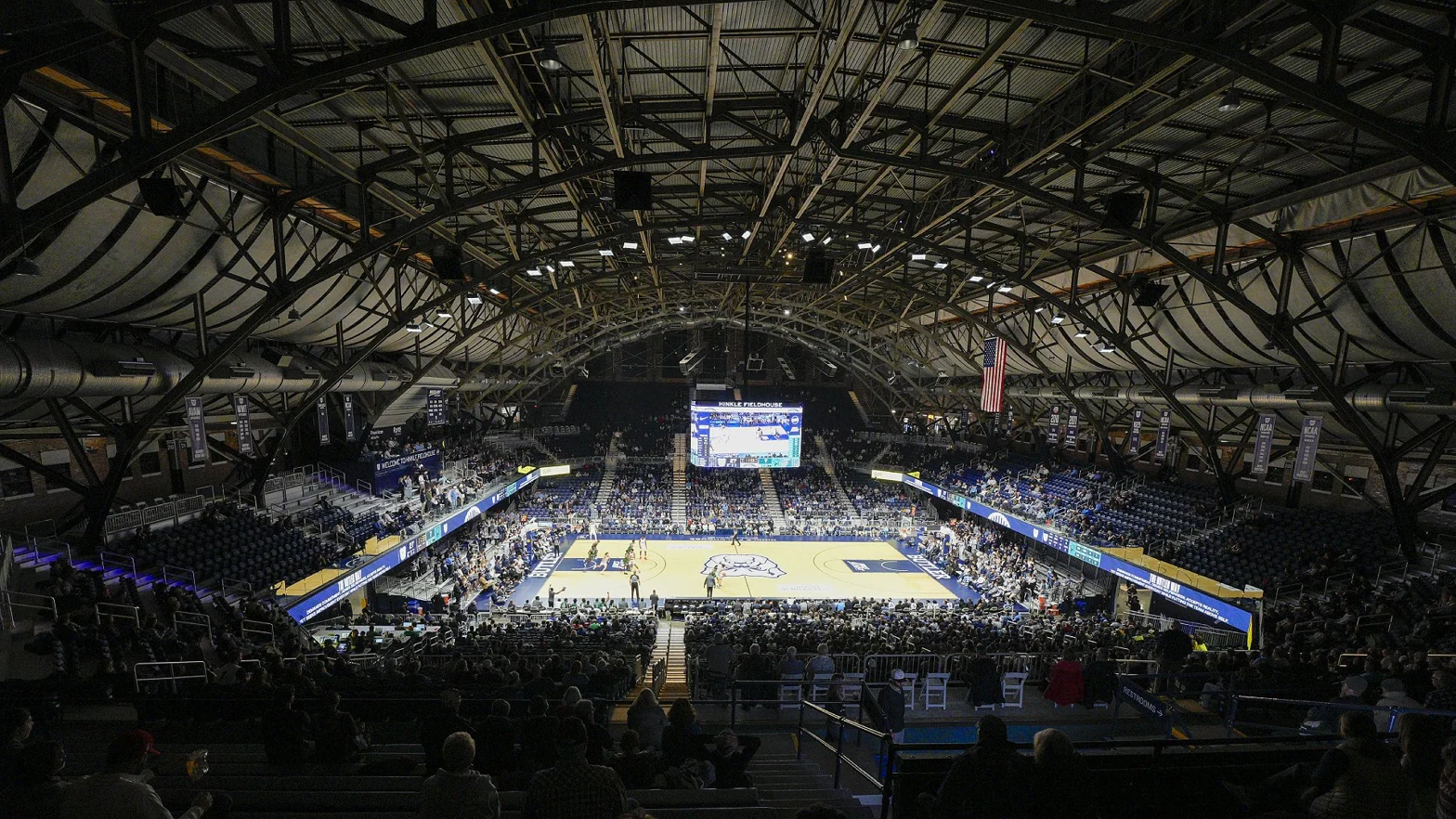
In the final, the East's surviving team plays the West's surviving team for the trophy. The 2026 championship is set for December 11 at Butler University’s Hinkle Fieldhouse in Indianapolis, with U.S. coverage on Prime Video. Neither club needs to have Indianapolis as its home market. The league named the venue ahead of the group draw, so its location does not depend on which finalist had the stronger record. The league's title game announcement gives the date, venue and broadcaster.
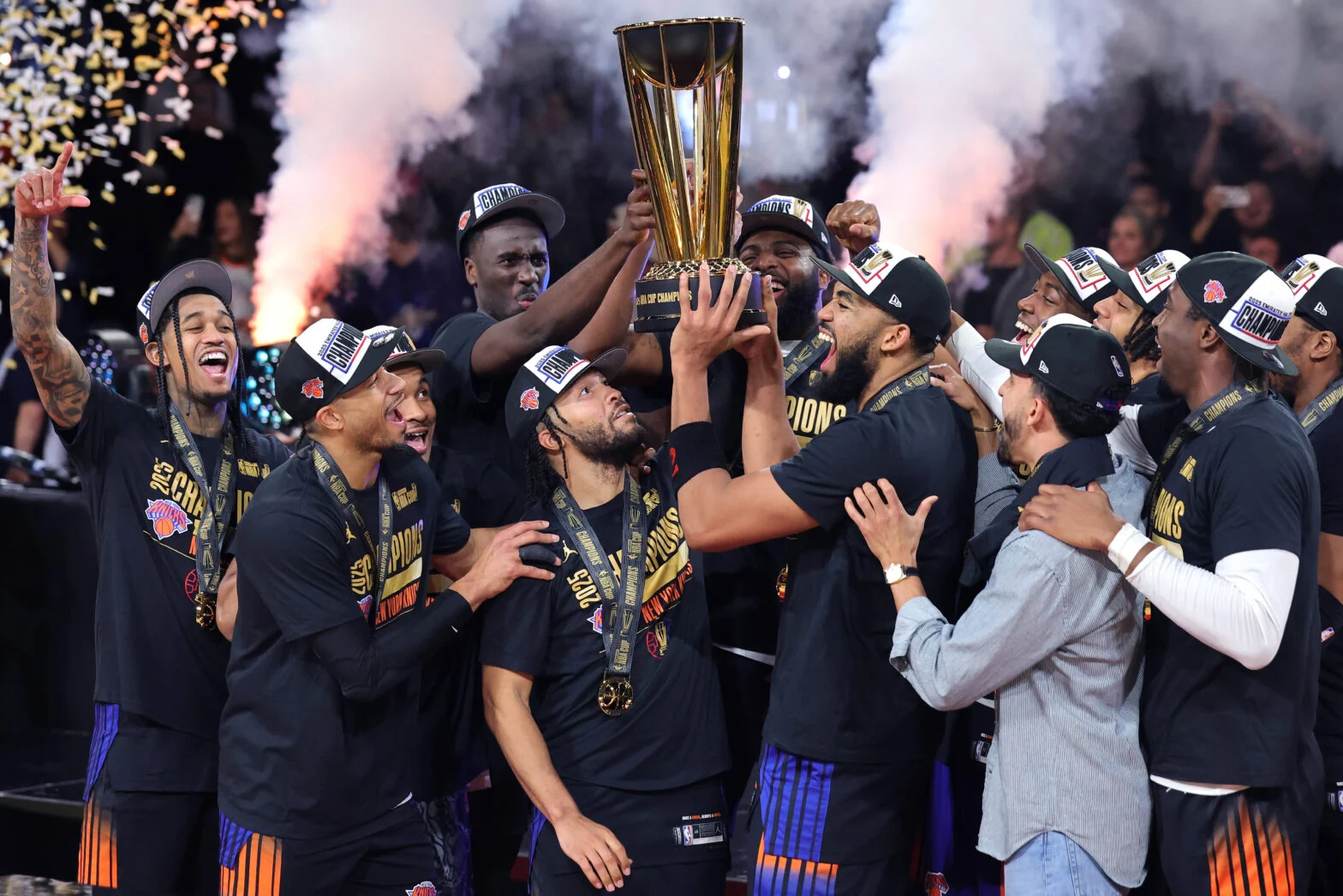
For the finalists, it is a game beyond the 82-game season. Its result does not change their regular-season records, and its points and minutes stay out of regular-season statistics. The cup trophy, the tournament's MVP and the All-Tournament Team belong to this competition. The media panel considers games from the group stage as well as the knockout round for the individual honors. The Lakers won the first tournament in 2023, the Bucks won in 2024 and the Knicks followed in 2025. When you see one of those titles in a team’s record book, it represents the fall competition. The regular season still goes on and the spring NBA Playoffs still determine the NBA champion.
Comments (0)
Share a useful tip or ask a question about this guide. Keep it friendly and on topic. Comments are checked before they appear.
No comments yet. Be the first to join the conversation.
Join the conversation
Sign in with Google to leave a comment.